
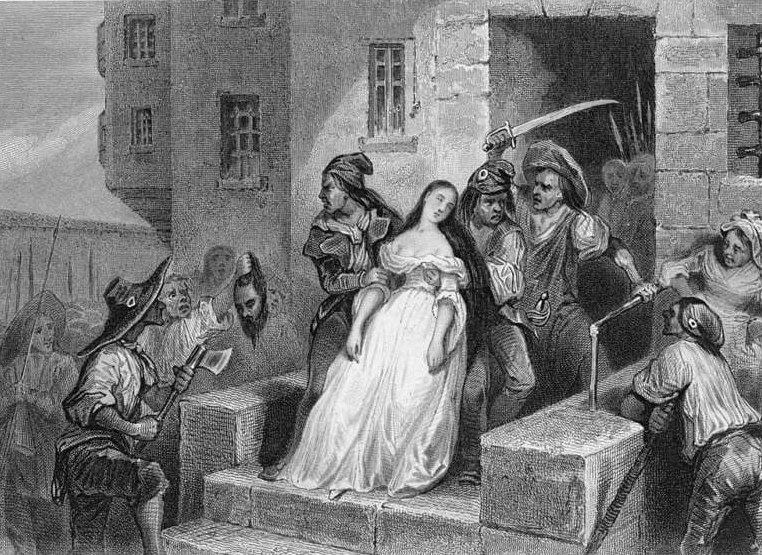
Image: The Death of the Princess de Lamballe (wiki) c Johannot, Antoine
In the late eighteenth century, amid the brilliance of Versailles, one woman drew particular attention through her elegance and quiet grace.
Her name was Marie-Thérèse-Louise of Savoy-Carignan, known to history as the Princess de Lamballe.
A noblewoman distinguished by sincerity and refinement, she formed a close bond with Queen Marie Antoinette—a relationship marked by loyalty, affection, and a devotion that would ultimately lead her into mortal danger.
This article traces the life of the Princess de Lamballe and the tragic course of her friendship with Marie Antoinette.
1. A Noble Lineage and a Brief Marriage

Image: Princess de Lamballe public domain
Marie-Louise was born on September 8, 1749, in Turin, Italy.
Her father, Louis Victor, Prince of Carignano, headed a cadet branch of the House of Savoy. Her mother, Christine of Hesse-Rotenburg, descended from a lineage connected to the Bourbons. From birth, Marie-Louise stood at the intersection of Europe’s great dynastic networks.
In 1767, at eighteen, she married Louis Alexandre de Bourbon, Prince of Lamballe, a member of a junior Bourbon line.
From this point forward, she became known as the Princess de Lamballe.
The marriage was regarded as both advantageous and harmonious. Their families were well matched, and the couple themselves were admired for their beauty and refinement.
Yet the union proved tragically short.
The prince, given to excess, fell ill and died less than a year after the wedding.
Widowed young, the Princess de Lamballe was taken in by her father-in-law, the Duke of Penthièvre. In his household she led a quiet life and devoted herself to charitable works.
2. Meeting Marie Antoinette

Image: Marie Antoinette as Queen (1775) public domain
Marie Antoinette arrived in France from Austria in 1770.
Several years later, the two women were formally introduced at Versailles.
They developed an immediate rapport.
The young dauphine, still adjusting to the rigid etiquette and political undercurrents of the French court, found in the Princess de Lamballe a figure of calm, sincerity, and trustworthiness.
In 1775, upon becoming queen, Marie Antoinette appointed the princess Superintendent of the Queen’s Household—the highest female office in the court.
The position carried substantial responsibility, overseeing the queen’s domestic arrangements and the conduct of her ladies-in-waiting.
3. Waning Favor and the Rise of the Duchess de Polignac
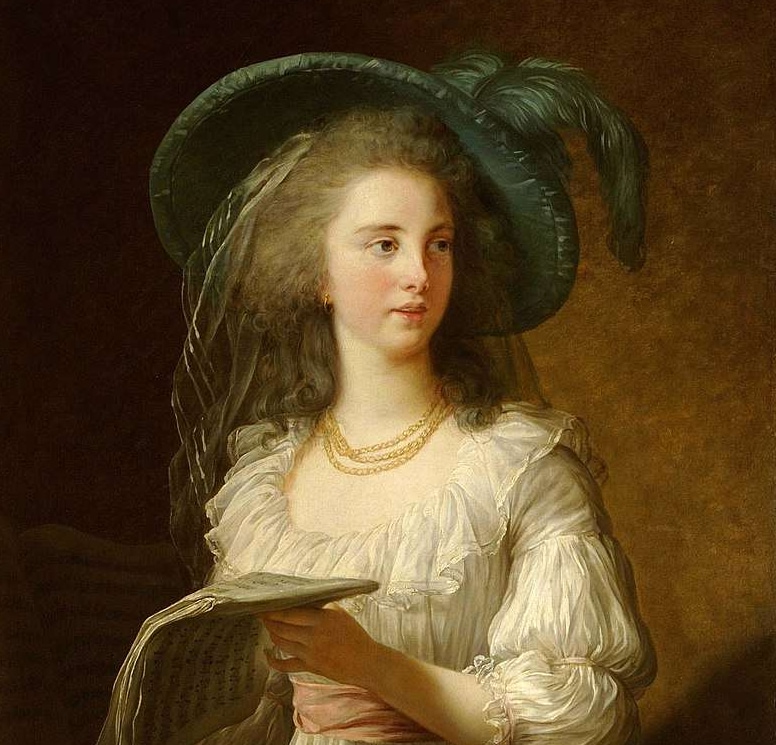
Image: Yolande de Polignac public domain
By the late 1770s, the balance of court favor began to shift.
Marie Antoinette grew increasingly close to Yolande de Polignac, whose lively personality and social charm contrasted with the quieter temperament of the Princess de Lamballe.
The princess showed no public resentment. Instead, she withdrew from court for a period, preserving both dignity and friendship.
The two women continued to correspond, and their bond, though altered, remained intact.
Eventually, the Princess de Lamballe returned to the queen’s side.
4. The French Revolution Begins

Image: The Storming of the Tuileries Palace (10 August 1792) public domain
The French Revolution erupted in 1789, shattering the world of Versailles.
The royal family soon became isolated and increasingly endangered.
Many nobles fled France.
The Princess de Lamballe did not.
Despite earlier distance between herself and the queen, she chose to remain with Marie Antoinette, fully aware of the risks.
When the royal family was imprisoned in the Temple Tower in 1792, she took lodgings nearby and continued to assist them.
Her loyalty, however, drew suspicion.
Revolutionary groups accused her of acting as a royalist agent, and public hostility toward her grew rapidly.
5. The September Massacres and a Terrible End
By September 1792, France was engulfed in turmoil.
Parisian prisons were crowded with nobles and suspected royalists, and mob violence surged in what became known as the September Massacres.
The Princess de Lamballe, held at La Force Prison, was brought before a hastily assembled revolutionary tribunal on September 3.
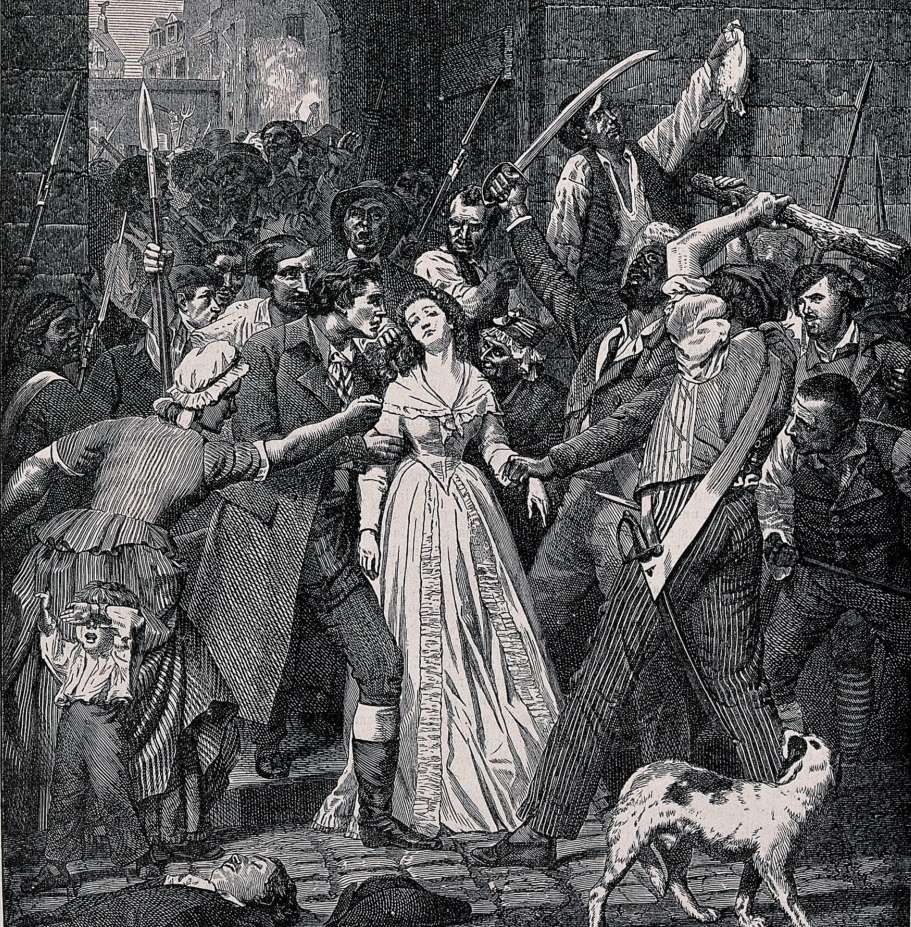
Image: The Princess de Lamballe Surrounded by a Mob Outside La Force Prison public domain
She was ordered to swear hatred of the monarchy and allegiance to the Republic.
According to contemporary accounts, she affirmed her loyalty to the Republic but refused to denounce the monarchy or Marie Antoinette.
This refusal sealed her fate.
At the command to “Take her away,” she was led outside before she could respond.
An armed crowd awaited her.
The mob seized her, struck her with clubs and knives, and inflicted fatal injuries.
Contemporary descriptions report severe blows to her head and torso; her face became unrecognizable, and her garments blood-soaked.
She was killed and then mutilated.
Her head was severed and placed upon a pike.
The mob carried the display through the streets of Paris and toward the Temple Tower.
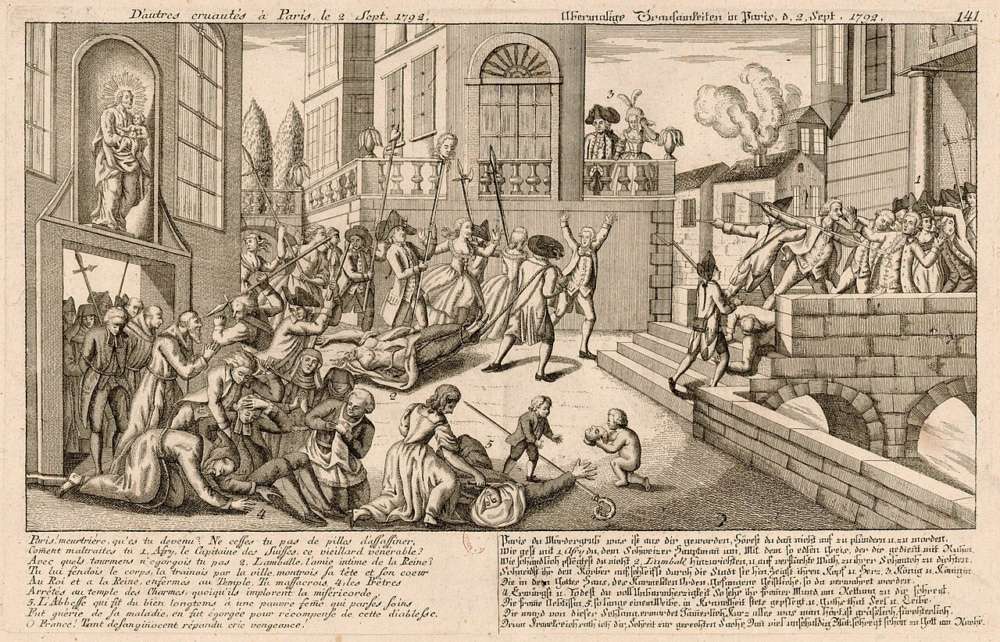
Image: The Mob Carrying the Princess de Lamballe’s Head and Heart on Pikes to the Temple Tower public domain
Some contemporary reports claim that the mob attempted to show the head to Marie Antoinette, though accounts differ and the exact circumstances remain debated among historians.
What is certain, however, is that the queen was devastated when she learned of her friend’s death.
Approximately one year later, Marie Antoinette herself was executed following a revolutionary trial.
Their friendship—formed in the ceremonial splendor of Versailles—was tested by revolution and ended in tragedy.
The Princess de Lamballe’s decision to remain at the queen’s side, despite clear danger, stands as a powerful testament to personal devotion.
Though her end was brutal, she is remembered as one of the last loyal companions of the ancien régime.
References:
Madame Campan. Memoirs on the Private Life of Marie Antoinette.
The Hidden and Terrifying Underside of Western History: The More You Learn, the More Despair You Feel, and other sources.