
1. A Senior Member of the Takeda Line, Renowned for Both Valor and Strategic Insight
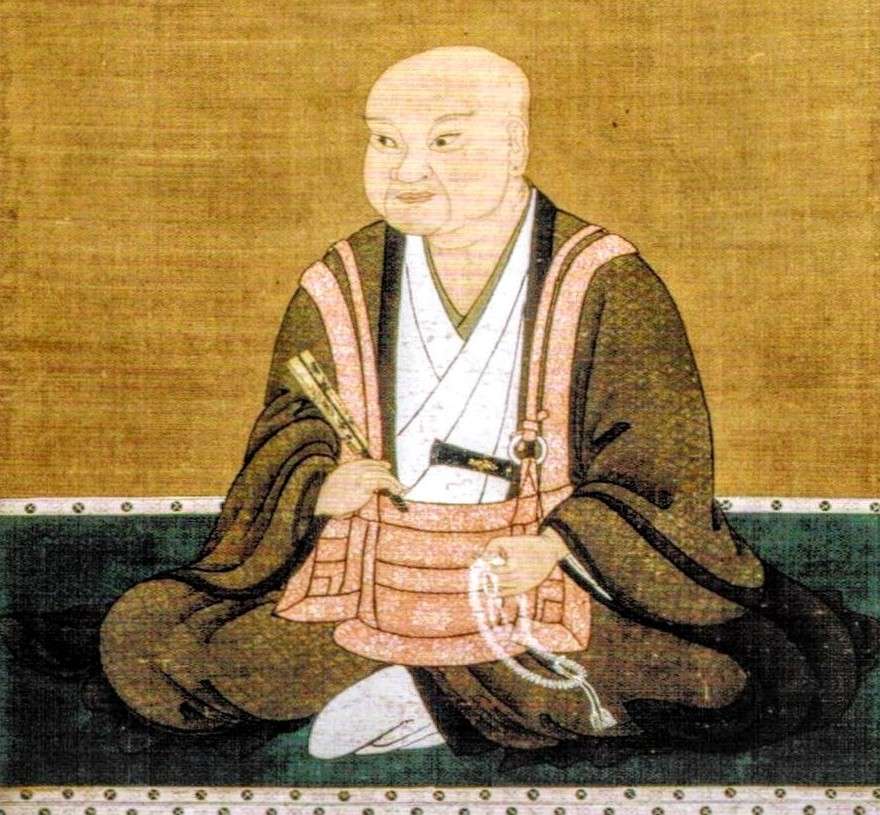
Image: Anayama Baisei (public domain)
Only a devoted student of Japanese history would immediately recognize the name Anayama Baisei (Nobukimi).
Yet Baisei served two generations of the Takeda rulers, Shingen and Katsuyori, and was regarded as one of the most prominent members among the famed Twenty-Four Generals of Takeda.
The Anayama family descended from the Kai-Genji, the same ancestral line as Takeda Shingen. Baisei’s mother, Nanshoin, was Shingen’s elder sister, while his wife, Kenseiin, was Shingen’s daughter. Through these close blood ties, the Anayama formed one of the most intimate kin groups of the Takeda house.
At the same time, the family governed the Kawachi district in southern Kai Province, an area containing several major gold mines such as Nakayama, Hayakawa, and Kurobashira. These mines were vital to the economic foundation of the Takeda domain.
Under Baisei’s father, Nobutomo, the Anayama established fortified residences including Shimoyama Castle and developed their own administrative network, functioning in many respects as a semi-autonomous domain within the broader Takeda sphere.
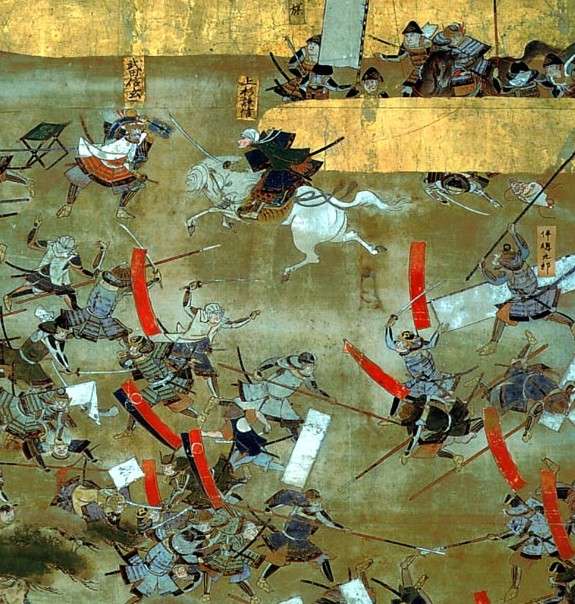
Image: Fourth Battle of Kawanakajima (public domain)
According to the Koyo Gunkan, Baisei was entrusted with defending Shingen’s headquarters during the Fourth Battle of Kawanakajima in 1561.
Also known as the Battle of Hachimanbara, this was the largest and most ferocious of the Kawanakajima engagements. It claimed the lives of Shingen’s brother Nobushige and the strategist Yamamoto Kansuke. Some accounts even describe a direct encounter between Shingen and Uesugi Kenshin, though its authenticity remains uncertain.
That Baisei was placed in charge of defending the Takeda main camp amid such chaos speaks to the deep confidence Shingen placed in him.
Baisei also distinguished himself as a capable negotiator and strategist. He often handled sensitive diplomacy and intelligence gathering with neighboring lords. This side of his career would later, ironically, connect him to the circumstances leading up to the Honnoji Incident—though that is a topic for another discussion.
2. A Deepening Rift with Takeda Katsuyori and the Path Toward Defection
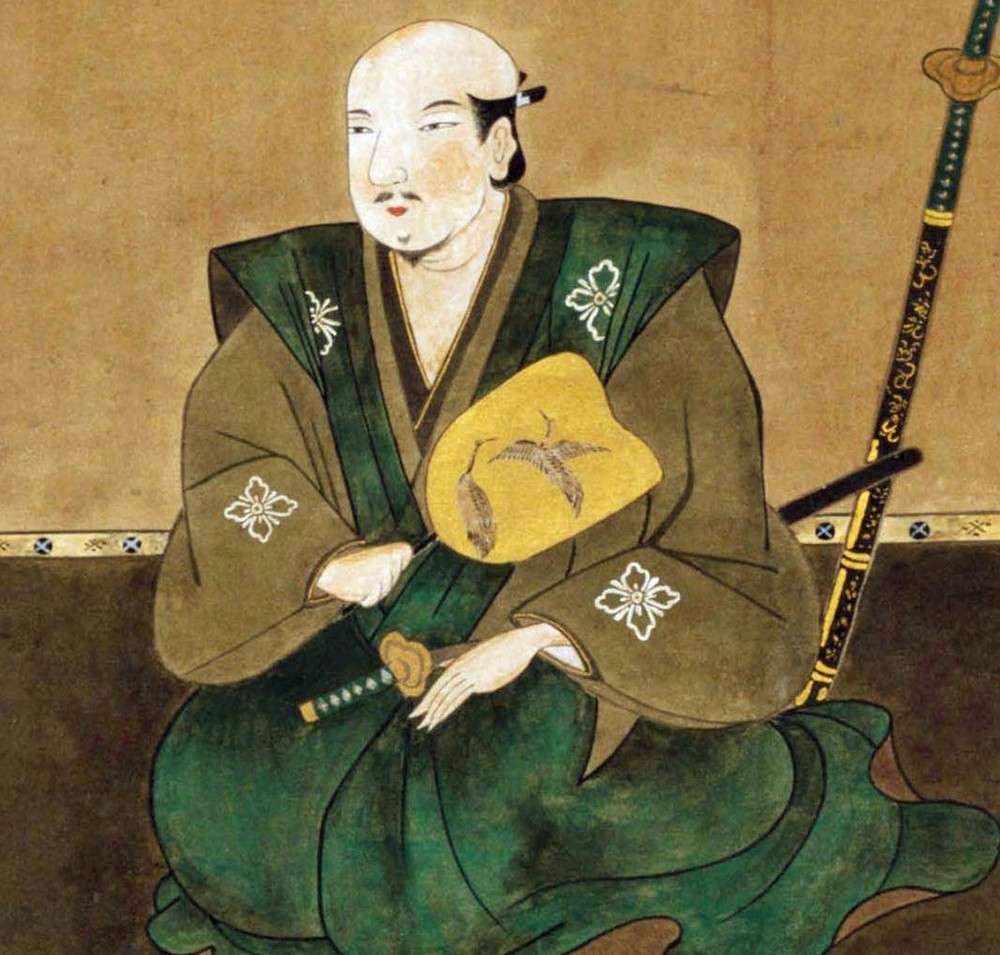
Image: Portrait of Takeda Katsuyori (Jomyoin, Mount Koya) public domain
Despite his earlier achievements, Baisei is remembered most for his betrayal of Katsuyori, the last head of the Takeda clan.
His first significant act of disloyalty appeared during the Battle of Nagashino in May 1575. Positioned at the center of the Takeda formation with Takeda Nobutoyo and Obata Nobusada, Baisei avoided major engagement while many senior commanders, including Yamagata Masakage and Baba Nobuharu, died in fierce combat. He withdrew with most of his retainers alive.

Image: Folding Screen Depicting the Battle of Nagashino (Tokugawa Art Museum) public domain
Before the battle, Baisei had urged Katsuyori to avoid confronting Oda Nobunaga directly. He repeated his advice even as the fighting intensified, but Katsuyori refused to listen. A deep and ultimately irreparable rift emerged between them.
After the defeat, Kosaka Masanobu, lord of Kaizu Castle and one of the Takeda Four Guardians, recommended that Katsuyori order the suicides of Nobutoyo and Baisei. Katsuyori dismissed the proposal, but the fact that Masanobu raised it indicates how widely Baisei was regarded as partly responsible for the disaster.
In an attempt to repair relations, Baisei sought to arrange a marriage between his son, Katsuchiyo, and Katsuyori’s daughter. The negotiations collapsed, worsening tensions even further.
Around this period, Baisei adopted his monastic name, Baiseisai Fuhaku, though he continued to be known simply as Baisei.
3. Secret Communication with the Oda and His Recognition as a Subordinate Daimyo
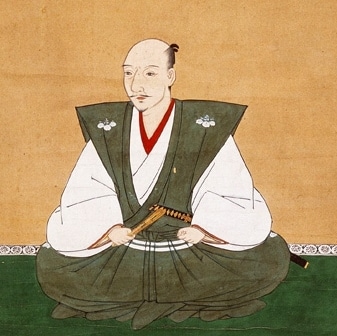
Image: Oda Nobunaga (public domain)
Baisei is believed to have begun clandestine communication with Oda Nobunaga and Tokugawa Ieyasu in late 1581. The failure of the arranged marriage between his son and Katsuyori’s daughter appears to have been the decisive catalyst.
In 1582, Nobunaga launched a full-scale invasion of Kai under the command of his heir, Nobutada. Anticipating the campaign, Baisei quietly arranged for his wife and children—held as political hostages in Kofu—to escape.
Through Ieyasu, Baisei proposed terms to Nobunaga: in return for his cooperation, he sought stewardship of Kai Province and the right to assume the Takeda name. Nobunaga accepted. The negotiation reveals Baisei’s meticulous preparation and political acumen.
In February, Nobutada advanced into Takeda territory from the Ina region. Coordinating with this movement, Ieyasu and Hojo Ujinao also entered Kai from separate fronts, initiating what became known as the Takeda Collapse Campaign.
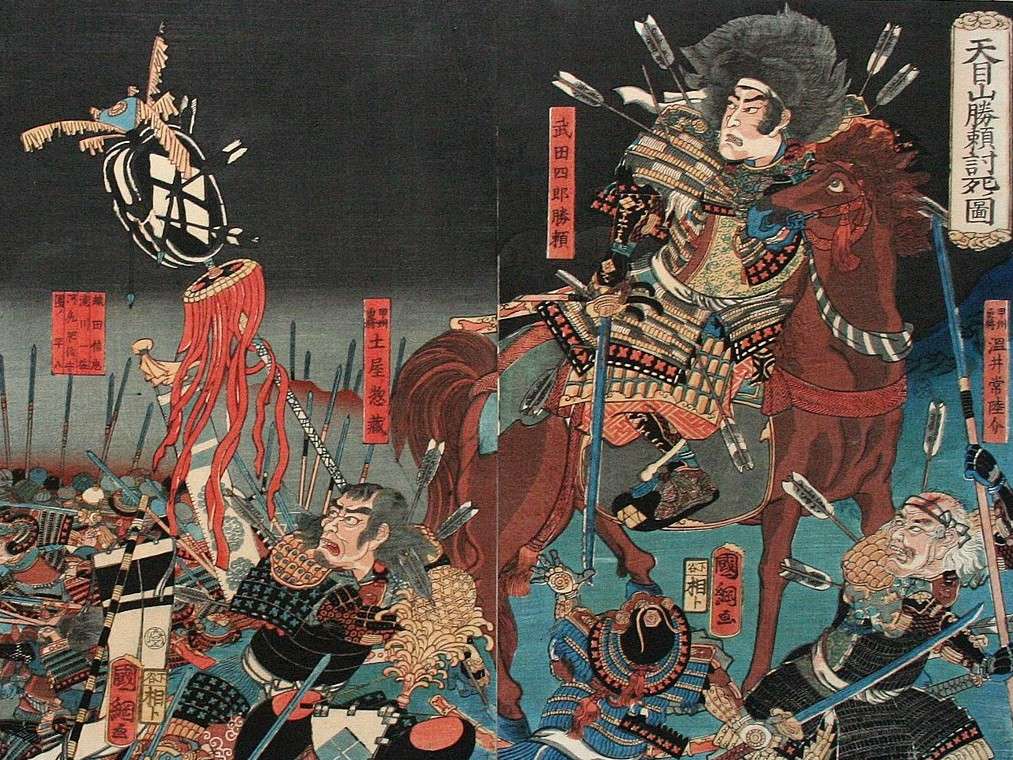
Image: Death of Takeda Katsuyori at Mount Tenmoku (Utagawa Kunikazu) public domain
Abandoned and outmatched, Katsuyori saw no path forward. On March 11, he took his own life at Tano near Mount Tenmoku, together with his heir Nobukatsu, his wife (a Hojo princess), and the retainers who remained loyal to the end.
Thus ended the five-century lineage of the Kai Takeda, descendants of Minamoto no Yoshimitsu.
After the collapse of the clan, Baisei received formal confirmation from Nobunaga of his Kawachi holdings in Kai and the Ejiri domain in Suruga. He became a subordinate daimyo under the Oda and was assigned to support Tokugawa Ieyasu.
Yet only three months later, amid the turmoil following the Honnoji Incident, Baisei failed in his attempt to return to his domain and was killed shortly thereafter, meeting a sudden and tragic end.