- 1. The First Emperor’s Final Years and a Series of Uncanny Portents
- 2. Omen One The Astral Warning Known as Mars Guarding the Heart
- 3. Omen Two: A Meteorite Bearing a Dire Inscription
- 4. Omen Three: A Mysterious Man in Black and a Vanishing Jade Disk
- 5. Heaven’s Will or Human Discontent? The Qin Empire’s Collapse
1. The First Emperor’s Final Years and a Series of Uncanny Portents
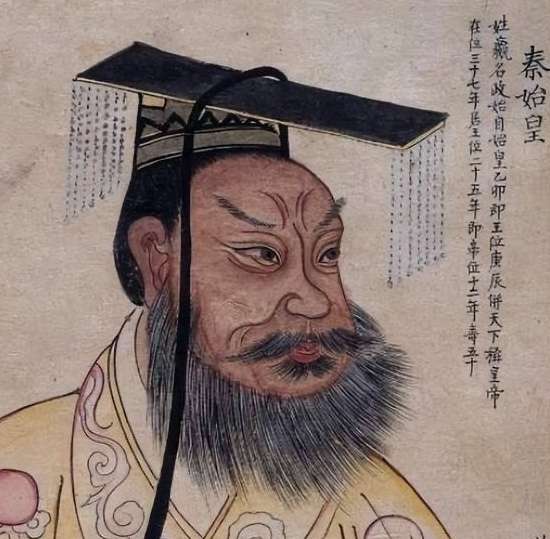
Image: Qin Shi Huang — Public Domain
Qin Shi Huang, born Ying Zheng, brought an end to centuries of warfare among the Warring States and unified China for the first time in history. Through overwhelming military strength and a tightly centralized bureaucracy, he forged an empire governed by strict laws and administrative order.
His sweeping reforms—standardizing weights and measures, instituting the commandery-county system, and constructing vast roads and canals—became the structural foundation of Chinese imperial rule for more than two millennia. In many respects, he earned the title often given to him: “the emperor of a thousand ages.“
Yet despite these monumental achievements, the emperor’s later years were marked by growing fear and unease.
He had survived multiple assassination attempts in his youth, and after unification the empire simmered with dissatisfaction. Heavy labor conscriptions, punitive laws, and mounting public resentment created a tense atmosphere. Above all, Qin Shi Huang lived in profound dread of death.
Driven by his obsession with immortality, he placed great trust in fangshi—alchemists and magicians such as Xu Fu—and sent expeditions across the seas in search of elixirs of eternal life.
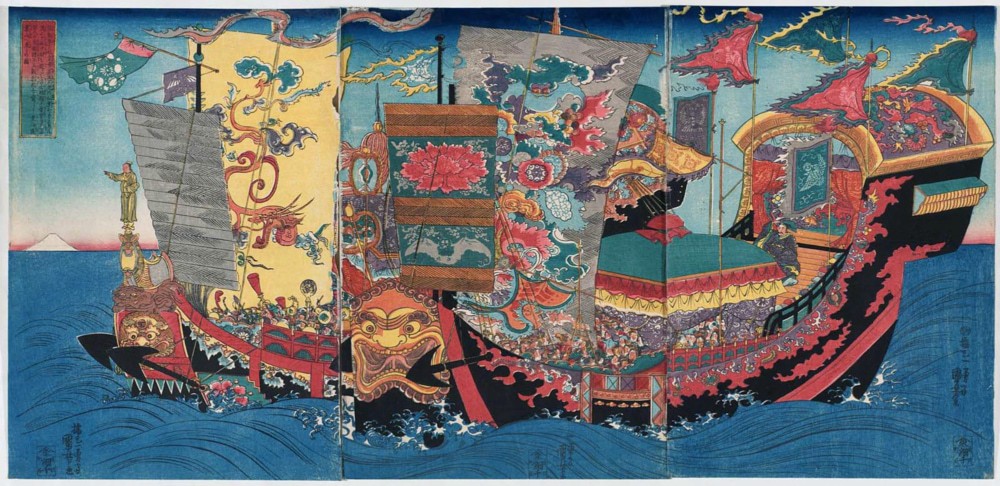
Image: Xu Fu sailing overseas in search of the elixir of immortality (Utagawa Kuniyoshi) — Public Domain
He also conducted elaborate imperial tours. During the eleven years after unification, he embarked on five major journeys to perform rituals, inspect the provinces, and leave steles proclaiming imperial authority. In his later years, these tours increasingly took on the character of spiritual quests, as he visited sacred mountains believed to harbor divine beings.
It was during this period that a series of extraordinary episodes occurred—events later generations would interpret as ominous foreshadowing of both the emperor’s death and the collapse of the Qin Empire.
Drawing primarily from the Records of the Grand Historian (Shiji, “Basic Annals of Qin Shi Huang”), this article examines three such episodes and considers what they may have signified.
2. Omen One The Astral Warning Known as Mars Guarding the Heart
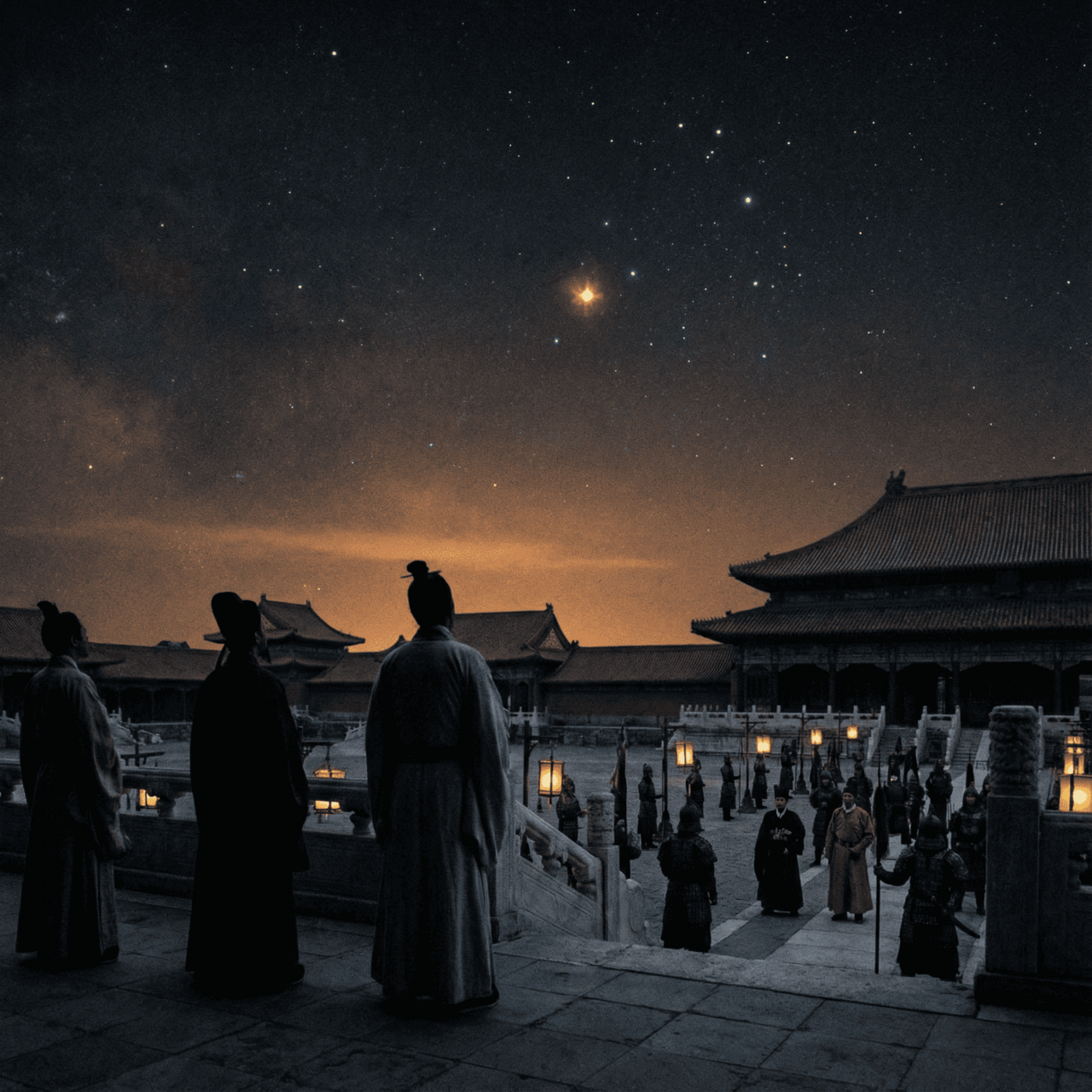
In 211 BCE, one year before Qin Shi Huang’s death, ancient astronomers observed a celestial phenomenon deeply feared across early China: Yínghuò Shǒuxīn, “Mars Guarding the Heart.”
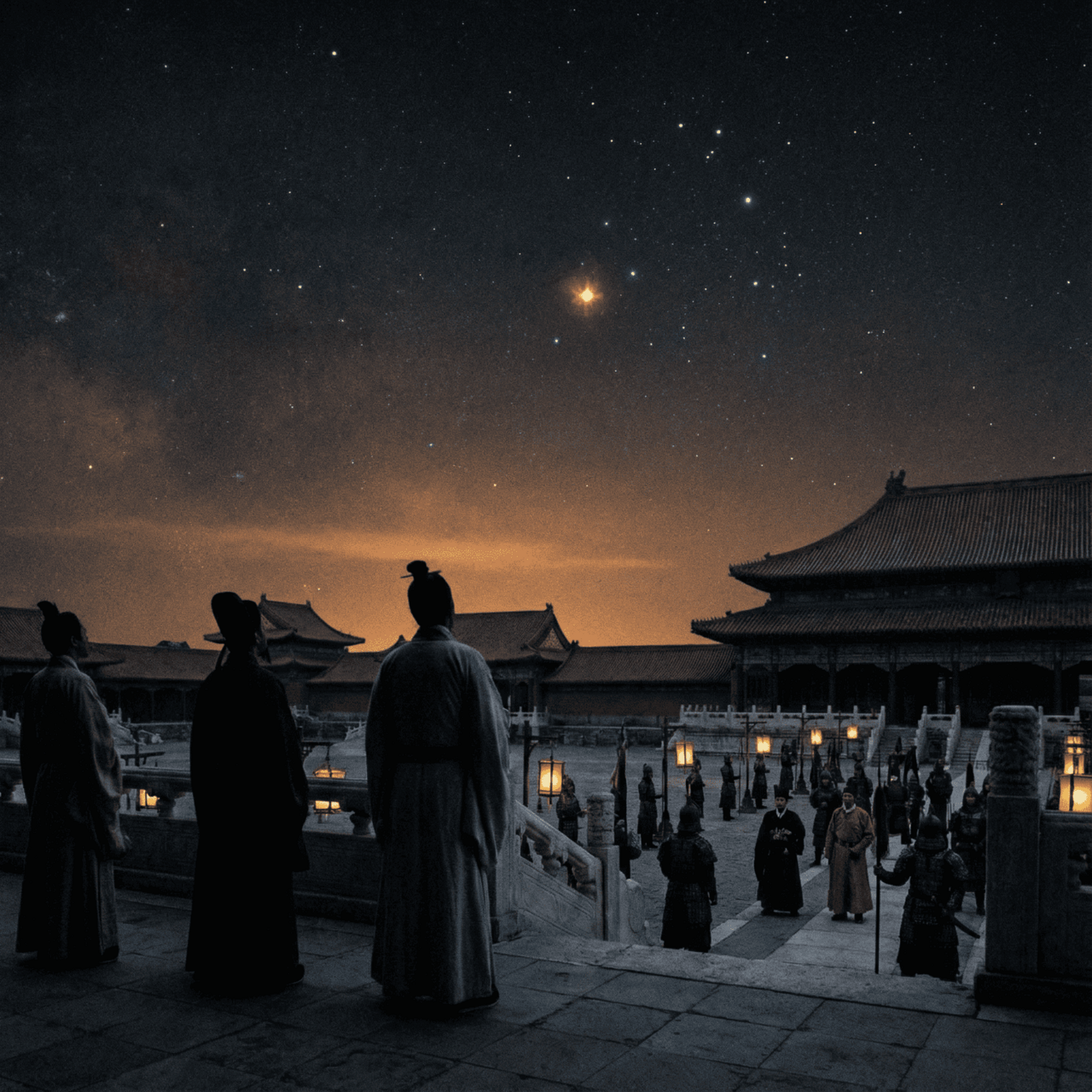
Image: Concept illustration of 熒惑守心 (AI-generated)
“Yínghuò,” the ancient name for Mars, was associated with instability, war, and misfortune because of its fiery glow and erratic motion.
The “Heart” referred to the Heart Mansion, one of the 28 lunar lodges, symbolically linked to the emperor.
When Mars entered this constellation and lingered there, the event was interpreted as a grave celestial admonition—often heralding the death of a ruler or the downfall of a dynasty.
The Shiji notes succinctly:
> “In the 36th year, Mars guarded the Heart.”
To ancient observers, heaven and human affairs were intertwined.
Astronomical anomalies were not viewed as natural cycles but as reflections of political disorder or warnings against a ruler’s misconduct.
Thus, this astral omen likely inspired widespread anxiety within the court.
Modern astronomy explains Mars’ stationary and retrograde motion as predictable orbital behavior, devoid of supernatural meaning.
Yet for the Qin Empire—already strained by oppression and public discontent—the omen could not be dismissed lightly.
To Qin Shi Huang, the implication must have been deeply unsettling.
3. Omen Two: A Meteorite Bearing a Dire Inscription
Shortly after the celestial event, another disquieting incident occurred.
A blazing meteor streaked across the sky and fell in the commandery of Dongjun, reportedly turning into a large stone upon impact—almost certainly a meteorite.
Someone in the area carved a stark message onto its surface:
> “When the First Emperor dies, the realm will divide.”
This inscription, whether an act of prophecy or protest, could be read as a direct challenge to the legitimacy and stability of Qin rule.
The Shiji recounts:
> A meteor fell in Dongjun and became a stone.
> Someone engraved upon it: “When the First Emperor dies, the land will be divided.”
> The emperor ordered an investigation, but no one confessed.
> Enraged, he had all who lived near the stone executed and had the stone burned to ashes.
Although Qin unification was unprecedented, it had been achieved through harsh taxation, forced labor, and unforgiving laws.
Resentment among the former Six States was widespread.
The inscription likely reflected this political frustration rather than genuine prophecy.
Qin Shi Huang’s response—destroying the stone and executing nearby residents—reveals less about superstition and more about fear that such words could fuel rebellion. Suppression, rather than investigation, was his priority.
4. Omen Three: A Mysterious Man in Black and a Vanishing Jade Disk
Not long after the meteorite incident, a third and even more enigmatic event allegedly took place.
A messenger returning from the eastern regions traveled at night along the Pingyu Road near Huayin.
There, a man dressed entirely in black appeared from the darkness and blocked his path.
Holding out a jade disk, the stranger said:
> “Deliver this to the Lord of the Hao Pool.”
The “Lord of the Hao Pool,” named after a lake at the Xianyang palace, was a title referring to Qin Shi Huang himself.
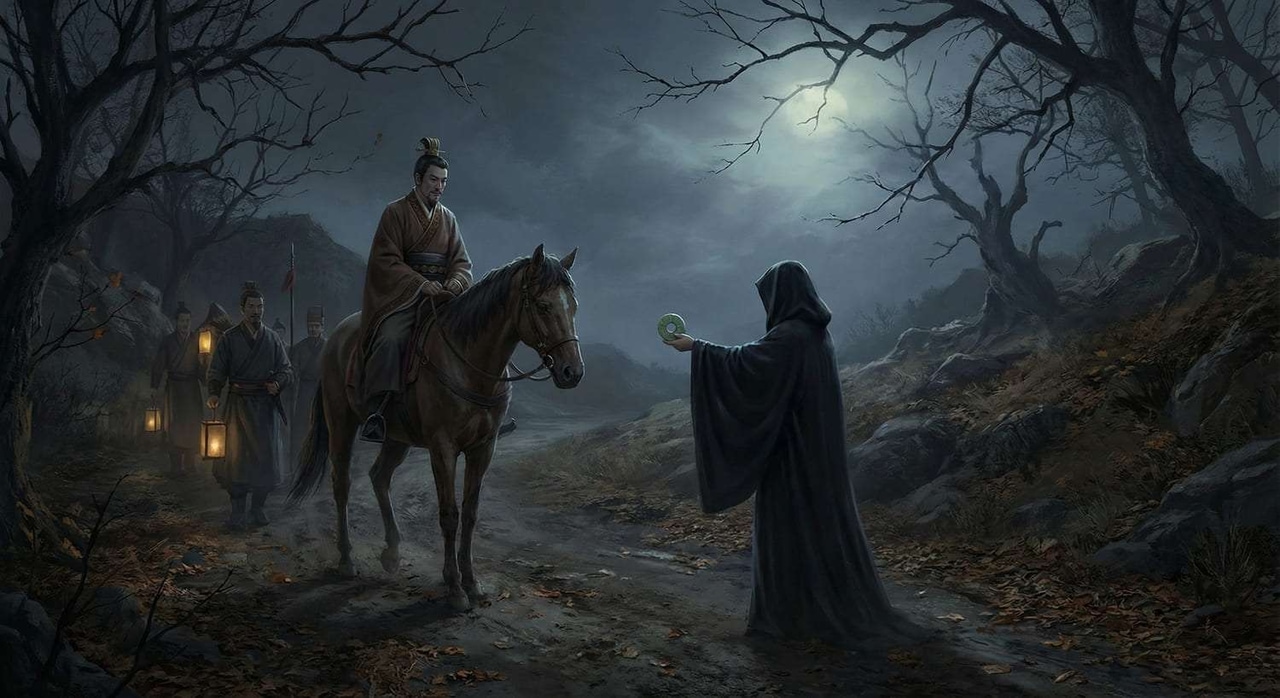
Image: Concept illustration of the mysterious man in black (AI-generated)
Before the messenger could react, the man added another chilling statement:
>“This year, the Ancestral Dragon will die.”
“Ancestral Dragon” was a symbolic title for the First Emperor.
When the messenger asked who he was, the figure vanished like mist, leaving only the jade disk behind.
The emperor, upon hearing the report, maintained an outward appearance of composure. Yet when officials examined the disk, they discovered it was one Qin Shi Huang had ceremonially cast into the river twelve years earlier during a ritual crossing.
Despite his calm exterior, the emperor ordered divination.
The oracle pronounced: “Traveling brings good fortune.”
Interpreting this as guidance for avoiding impending calamity, Qin Shi Huang forcibly relocated 30,000 households and set out on another imperial tour.
It would be his last.
In 210 BCE, during his fifth tour, the First Emperor fell ill and died at Shaqiu.
5. Heaven’s Will or Human Discontent? The Qin Empire’s Collapse
These three curious episodes became part of the lore surrounding Qin Shi Huang’s final days.
They may be understood as superstition, political agitation, or coincidence layered with meaning. Yet they coincided with a moment when the Qin Empire was already beginning to fracture under its own weight.
After the emperor’s death, rebellion spread rapidly.
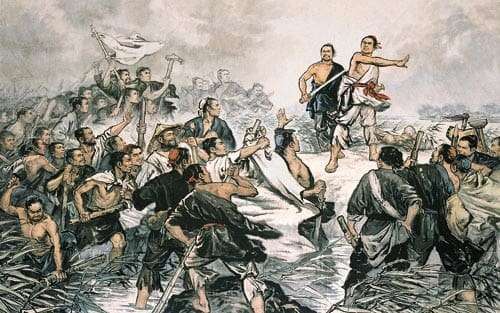
Image: The uprising of Chen Sheng and Wu Guang — Public Domain
The revolt led by Chen Sheng and Wu Guang ignited further uprisings across the realm.
Former nobles, disaffected commoners, and regional factions all rose in defiance.
The struggle eventually narrowed to two leaders—Xiang Yu and Liu Bang—whose conflict, the Chu–Han Contention, ended with Liu Bang’s victory and the establishment of the Han dynasty in 202 BCE.
The empire Qin Shi Huang built unraveled only **fifteen years** after unification.
Whether these omens were divine warnings or reflections of human unrest, their stories have shaped how later generations imagined the emperor’s final years.
The truth remains elusive, yet the legends endure.
References:
Sima Qian, Records of the Grand Historian (Shiji), “Basic Annals of the First Qin Emperor.”
Ban Gu, Book of Han (Hanshu), “Treatise on the Five Phases,” and other sources.