At the turn of the twentieth century, Britain’s social world combined the immense prosperity of the Industrial Revolution with the lingering moral rigidity of the Victorian age.
Among the aristocracy, noble birth and great wealth were expected to be accompanied by restraint and dignity. Yet one young nobleman stood apart from these expectations so dramatically that he became a legend of his own making.
That man was Henry Cyril Paget, the 5th Marquess of Anglesey.
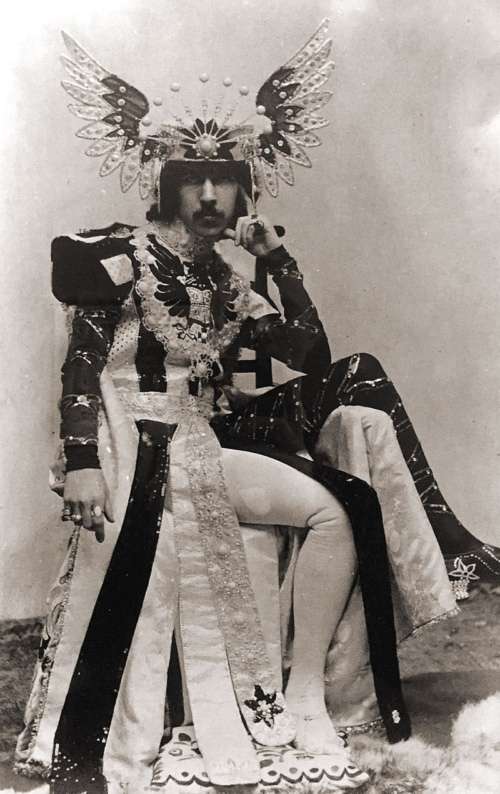
image : Portrait of Henry Paget, 5th Marquess of Anglesey (public domain)
In October 1898, following the death of his father, Henry inherited the marquessate, an estate of roughly 30,000 acres, and an annual income worth about £16.06 million in 2025 values (approximately ¥2.88 billion).
But this extraordinary fortune was swiftly poured into lavish self-expression and theatrical extravagance. Within six years, he had amassed enormous debts and was declared bankrupt at the age of twenty-eight.
He died the following year, at twenty-nine.
What follows is an account of his remarkable and ultimately tragic life.
1. A Distinguished Lineage and the Rise of a Young Marquis
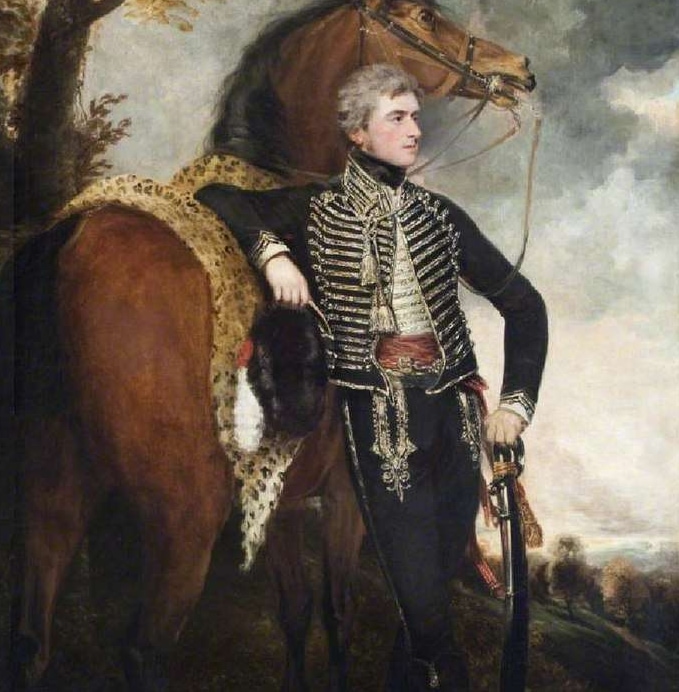
image : The 1st Marquess of Anglesey, Henry’s great-grandfather (public domain)
Henry Paget was born on June 16, 1875. His exact birthplace remains uncertain, but after the early death of his mother he reportedly spent much of his childhood in Paris.
His great-grandfather, the 1st Marquess of Anglesey, became renowned as a hero of the Battle of Waterloo, commanding the cavalry and continuing to fight even after losing his right leg.
Henry’s father was the 4th Marquess of Anglesey, and his mother was Blanche Mary Boyd.
Because Henry grew up partly in France, rumors later circulated that his biological father was the celebrated French actor Benoît-Constant Coquelin. In truth, Henry was raised by his maternal aunt, and Coquelin had no connection to him.
After leaving France, Henry was educated at Eton College and later received a commission as a second lieutenant in the 2nd Volunteer Battalion of the Royal Welsh Fusiliers.
On October 13, 1898, at the age of twenty-three, he succeeded his father as the 5th Marquess of Anglesey, inheriting both the title and a vast income.
It was the beginning not of stability and influence, but of a descent into theatrical excess.
2. The Marquis Who Danced Like a Butterfly
A Life of Glittering Extravagance
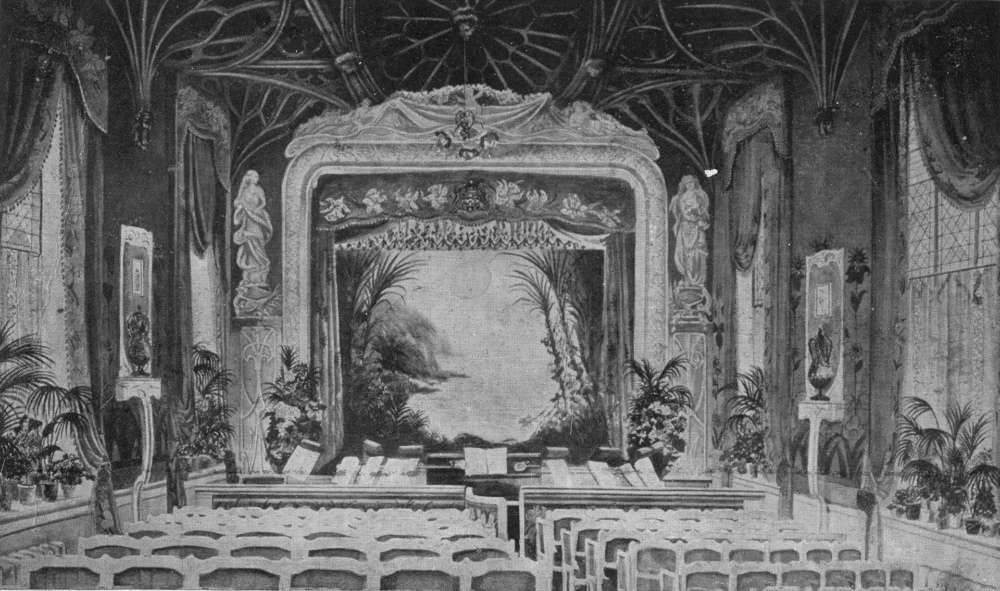
image : Interior of the theatre renovated by Henry Paget (public domain)
Once he became marquess, Henry began reshaping his world with astonishing speed.
He renamed the family seat on Anglesey, Plas Newydd, as “Anglesey Castle,” and transformed the estate’s chapel into a 150-seat theatre that he called the Gaiety Theatre.
By around 1899, he was appearing on stage himself, adorned in sumptuous silks, jewels, and flowing robes.
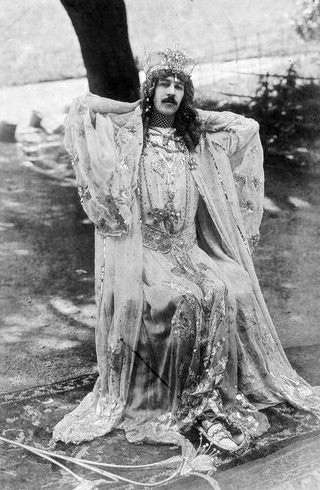
image : Henry Paget in stage costume, c. 1900 (public domain)
His early shows featured songs, dances, and comic sketches, but he later starred in major dramatic works such as Oscar Wilde’s *An Ideal Husband* and Shakespeare’s *Henry V*.
The performance for which he became most famous was the “Butterfly Dance.”
Draped in vast translucent silks that billowed like wings, he moved with hypnotic grace across the stage. Audiences were captivated, and society began calling him “the Dancing Marquis.”
Henry spent extravagantly on jewellery, furs, shoes, canes, embroidered pajamas, and a staggering number of stage costumes.
Records suggest he owned more than 200 pairs of shoes and over 30 sets of pajamas, not counting his theatrical wardrobe.
Increasingly, his life itself resembled a continuous performance.
3. The Prelude to Ruin and the Collapse of His Marriage
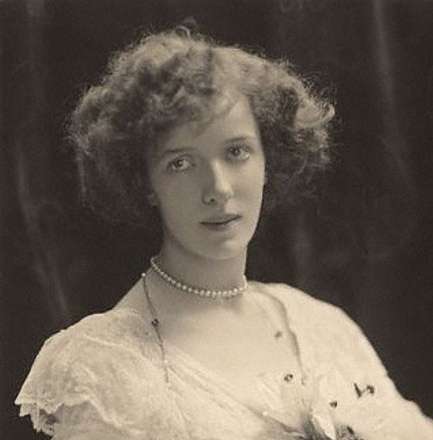
image :Lillian Florence Maud Chetwynd, wife of Henry Paget (public domain)
Before his most flamboyant years, Henry married his cousin, Lillian Florence Maud, on January 20, 1898.
Their personalities and lifestyles proved incompatible, and the couple separated after only six weeks. The marriage was later annulled on the grounds of non-consummation.
Meanwhile, Henry’s spending spiraled far beyond even his considerable income.
By 1904, he had accumulated debts totaling £544,000 — equivalent to roughly £74.98 million in 2025 values, or about ¥13.49 billion.
In less than six years, the fortune he inherited had vanished.
His possessions were sold in auctions that lasted for months.
Jewels alone fetched around £80,000.
The scandal deeply embarrassed the Paget family. Many documents related to Henry’s life were subsequently destroyed, leaving much of his story obscured.
4. A Life Cut Tragically Short
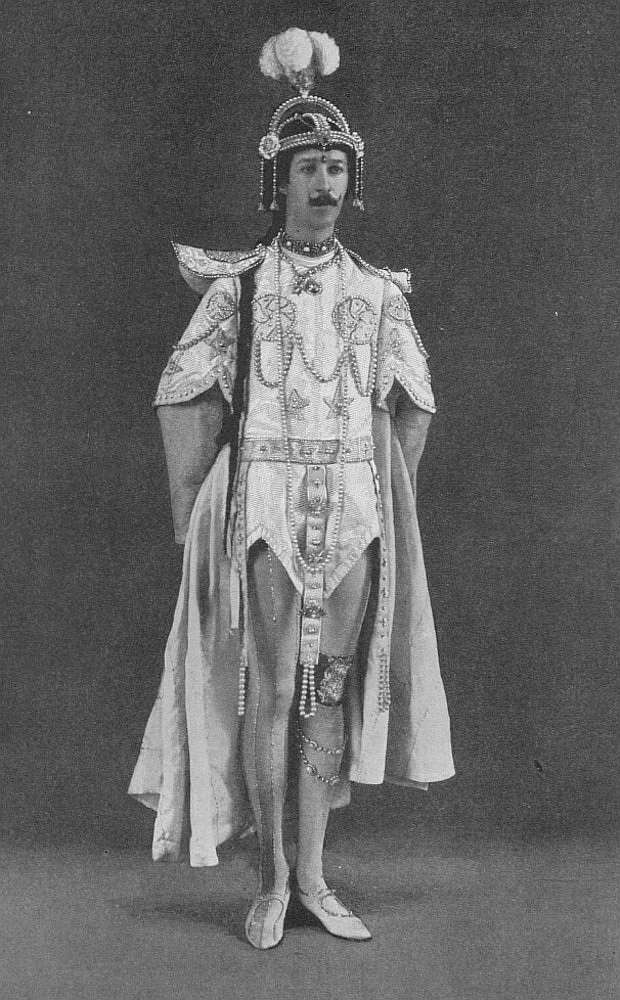
image : Henry Paget in elaborate costume, c. 1900 (public domain)
On June 11, 1904, Henry Paget was formally declared bankrupt.
His remaining assets were liquidated, and he moved to Monte Carlo, where he spent his final months in declining health.
He died on March 14, 1905, at the age of twenty-nine. His former wife, Lillian, is said to have been present at his bedside.
Henry was buried at St Edwen’s Church in Llanedwen on Anglesey.
Locals mourned him warmly, remembering him not only for his eccentricity but for his gentle and gracious manner.
The title passed to his nineteen-year-old cousin, Charles Paget, the 6th Marquess. Because so many records were destroyed, much of Henry’s life remains a mystery.
5. A Legacy of Dazzle and Self-Destruction
Henry Paget’s life was both dazzling and self-destructive.
His love of spectacle was not mere indulgence; it reflected a deeper impulse to shape his own existence as a kind of living artwork.
In recent years, he has been reinterpreted as an early figure in LGBT+ and gender-non-conforming history.
The recent film *Madfabulous* even presents him as a precursor to David Bowie — a visionary whose aesthetic sensibilities were decades ahead of his time.
Had he lived today, he might well have become a social-media icon, celebrated for his fashion, his performances, and his uncompromising individuality.
His life reminds us that wealth and freedom alone cannot guarantee happiness.
Henry Paget continues to fascinate precisely because he lived not by convention, but by the dictates of his own imagination.
References:
Gibbs, Vicary (ed.). The Complete Peerage, Vol. I. London: St Catherine Press, 1910.
The Hidden and Terrifying Underside of Western History: The More You Learn, the More Despair You Feel