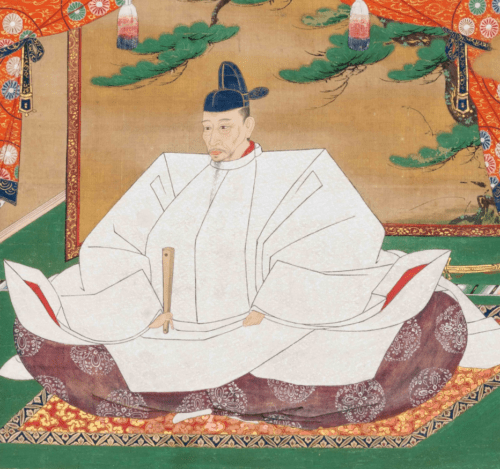
Image: Portrait of Toyotomi Hideyoshi by Kanō Mitsunobu (public domain)
Toyotomi Hideyoshi, the man who rose from obscurity to unify Japan and bring the Sengoku period to an end, is one of the most famous figures in Japanese history. Yet despite his prominence, the true details of his birth and background remain strikingly unclear.
According to the Toyokagami, a record compiled by Takenaka Shigemoto (the son of Hideyoshi’s strategist Takenaka Hanbei), Hideyoshi was born to “people of uncertain and humble background,” noting that even the names of his parents and relatives were not known with certainty.
But was Hideyoshi truly the son of an impoverished peasant, as later legends so often claim?
This article examines the major theories surrounding Hideyoshi’s family and explores why the origins of one of Japan’s most influential men became so thoroughly obscured.
1. Hideyoshi’s Father: Conflicting Accounts and a Vanishing Identity
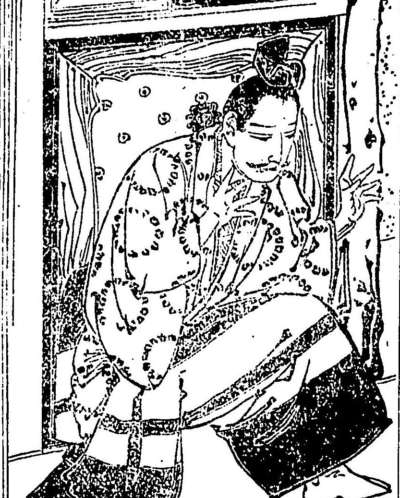
Image: “Ehon Taikōki,” depiction of Hideyoshi’s father, Nakamura Masakichi (public domain)
Two men are traditionally identified as Hideyoshi’s father.
One is his biological father, Kinoshita Yaemon.
The other is Chikuami (also written Chikuami Nyūdō), who later became his stepfather.
The commonly repeated narrative in novels and dramas is that Hideyoshi and his older sister were Yaemon’s children, while his brother Hidenaga and sister Asahi were born to Chikuami.
However, none of the contemporary documents from Hideyoshi’s lifetime confirm the existence or identity of either man. The earliest descriptions appear only in Edo-period texts, compiled decades after Hideyoshi’s death.
Three major versions of his father’s background appear in such sources:
Hōan Taikōki (early Edo period): Hideyoshi’s father was Chikuami, a retainer of the Oda family and a minor warrior whose household had recently fallen into decline.
Sofu Monogatari: Hideyoshi’s father was Chikuami from Hazama village, a member of the Oda clan’s attendants (dōbōshū). Hideyoshi was said to have been born in nearby Kiyosu.
Taikō Soseiki: Hideyoshi’s father was Kinoshita Yaemon, a foot soldier under Oda Nobuhide. After Yaemon’s death in 1543, Chikuami entered the family and fathered Hidenaga and Asahi.
However, these accounts contain an immediate chronological problem:
At the time Yaemon or Chikuami were supposedly active, neither a formal corps of dōbōshū nor organized firearm units appear to have existed in the Oda clan.
This weakens the credibility of both narratives.
Furthermore, works such as Hōan Taikōki contain many literary embellishments and cannot be treated as factual biographies.
Yet despite their inconsistencies, these accounts share a notable common element:
they all portray Hideyoshi’s father as someone who served the Oda clan in some capacity.
This suggests that Hideyoshi’s rise under Oda Nobunaga may not have been entirely the stroke of luck or extraordinary talent it is sometimes described as—but could have been facilitated by a family already positioned, however modestly, within the Oda sphere.
2. Hideyoshi’s Mother: Evidence of a Higher Social Standing
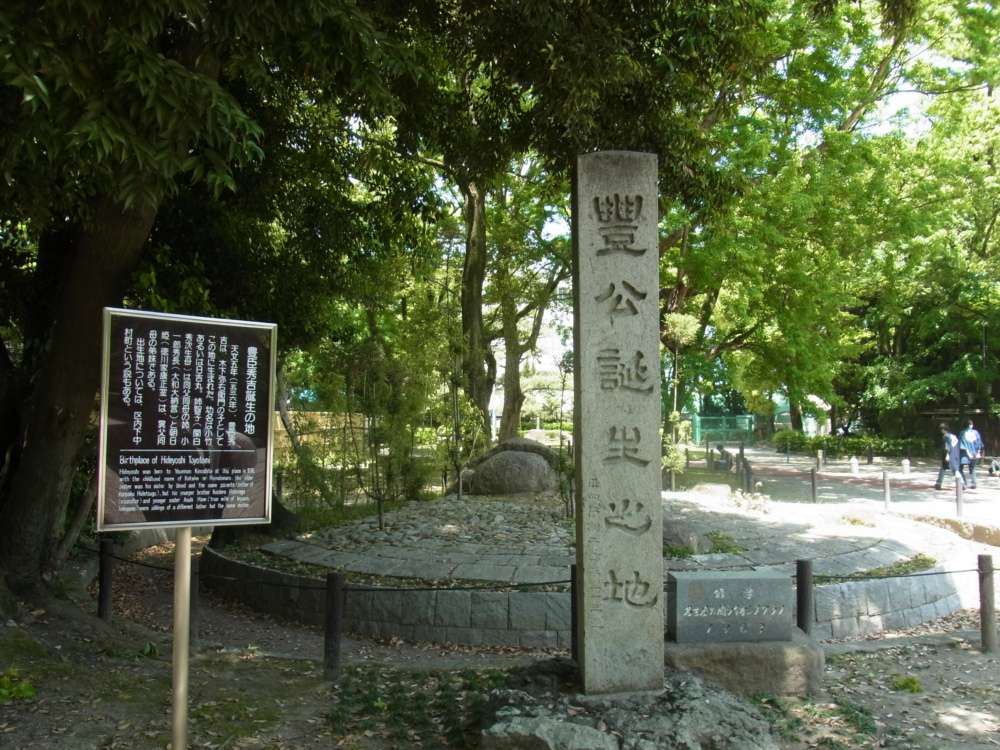
Image: Monument marking Hideyoshi’s birthplace (photo by Bariston, Wikimedia Commons)
Contemporary sources state that Hideyoshi’s mother was born in 1517 in Gokiso village in Aichi District, Owari Province.
While the name “Naka,” often used in popular culture, appears frequently, no reliable contemporary document confirms that this was actually her name.
According to a genealogical record preserved by descendants of Aoki Kazunori, a cousin of Hideyoshi, his mother was the daughter of Seki Yagorō Kanezumi, a resident of Aichi District.
The surname “Seki” is significant.
In rural 16th-century Japan, a household had to possess a certain level of land, wealth, and local authority to publicly use a hereditary surname.
In other words, Hideyoshi’s mother likely came from a family that held at least mid-level status within the village hierarchy.
If so, her husband—whether Yaemon or Chikuami—would also have needed a social position respectable enough to marry into such a family.
This supports, albeit indirectly, the idea that Hideyoshi’s father belonged not to the lowest strata of society but to a household with some economic stability and possible ties to local warrior networks.
3. Was Hideyoshi’s Family Actually Comfortable? Rethinking the “Poor Peasant” Legend
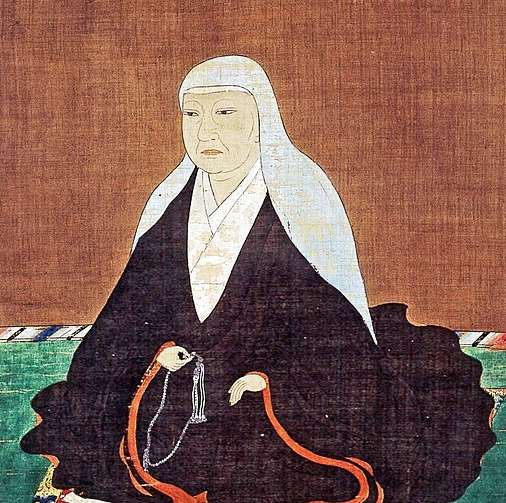
Image: Portrait of Hideyoshi’s mother, the Ōmandokoro (public domain)
The image of Hideyoshi as a man rising from the absolute bottom of society is deeply entrenched in folklore and later narratives.
However, when examined historically, “low-born” in this context means “low-ranking compared to aristocrats and daimyo,” not destitute.
Several points suggest that Hideyoshi’s household was likely middle-class by contemporary peasant standards:
Hideyoshi possessed enough literacy and numeracy to serve in administrative roles under Nobunaga.
He adapted quickly to military, managerial, and diplomatic tasks—skills unlikely to have developed in a severely impoverished environment.
Fukushima Masanori, a key general in Hideyoshi’s service, was said in some traditions to be Hideyoshi’s paternal cousin, which implies that the family maintained recognized kin networks.
Hideyoshi once wrote to Hōjō Ujinaga claiming that he had been “orphaned” in childhood.
This likely refers not to a lack of known parentage but rather to the family’s decline after his father’s death, which may have forced the young Hideyoshi into various forms of employment.
His well-known early years—working as a servant, traveling between villages, engaging in small trade—may reflect economic disruption rather than inherently low birth.
4. Why Was Hideyoshi’s Father Erased from the Record?
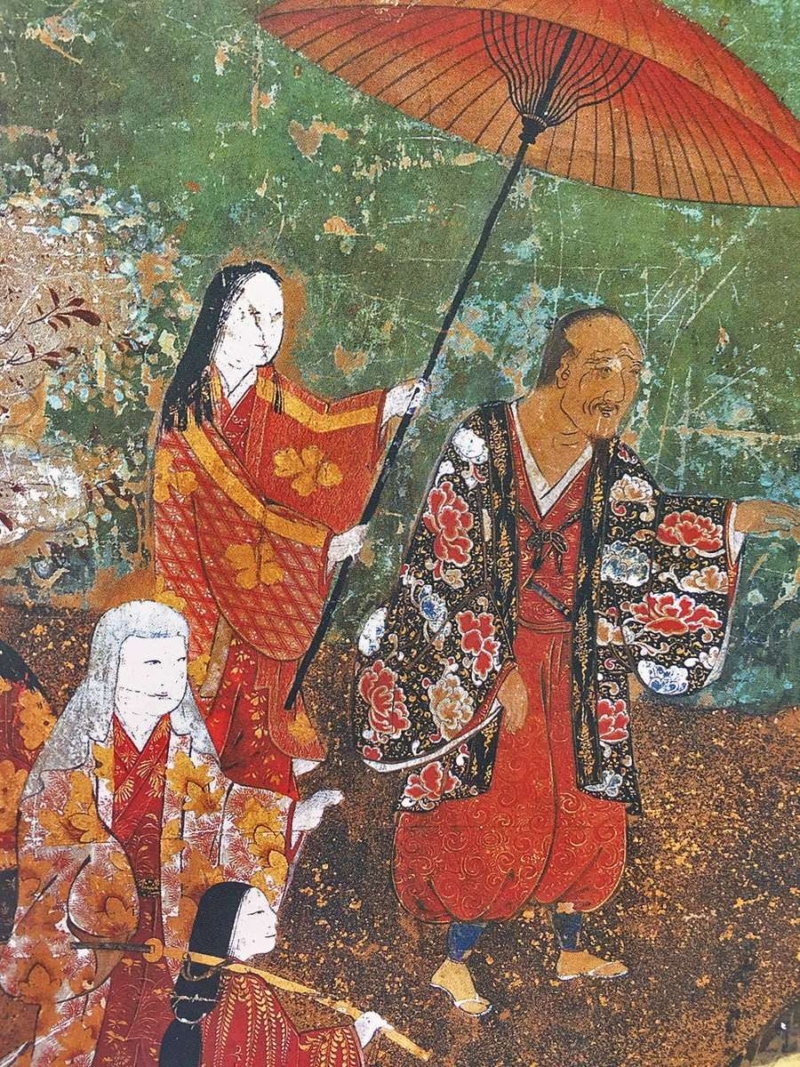
Image: Hideyoshi and Kita no Mandokoro depicted in the “Daigo Hanami Screens” (public domain)
A striking mystery remains:
Why did Hideyoshi leave behind no official recognition of his father—not even a posthumous court rank—despite his enormous authority as kampaku?
One plausible explanation is that Hideyoshi deliberately obscured his origins after reaching national power.
Around 1585, just before and after becoming kampaku, Hideyoshi began promoting the idea that he was of imperial descent (kōin setsu).
This was a political strategy:
The kampaku position was traditionally held by the Fujiwara lineage
Hideyoshi had no aristocratic ancestry
Claiming imperial blood would provide a new form of legitimacy
Once he began cultivating this image, acknowledging his actual father—likely a minor warrior or village official—would undermine his newly engineered political identity.
Thus:
No official memorialization
No court rank for the father
No preserved grave
No formal genealogical recognition
All of this may have been part of a calculated effort to sever traces of his true family background.
The man dismissed as “the son of obscure rural folk” remains, paradoxically, one of the least understood figures in Hideyoshi’s life story.
Conclusion
The origins of Toyotomi Hideyoshi have never been fully resolved, and the available sources—contradictory and often embellished—reflect as much mythmaking as history.
Yet by examining the surviving clues, a more nuanced picture emerges:
Hideyoshi was not born a destitute peasant
His parents likely held modest but respectable positions within village society
His father may have had ties to the Oda clan
Hideyoshi himself may have obscured these facts for political reasons
In exploring these uncertainties, we come closer to understanding the early environment that shaped one of Japan’s most remarkable political figures—a man whose extraordinary ability to win people over would eventually transform the entire country。
Sources Referenced
Hashiba Hideyoshi and His Family by Kuroda Motoki, Kadokawa Sensho
Cutting-Edge Hideyoshi Studies, ed. by the Japanese Historical Source Research Society, Yosensha Rekishi Shinsho
Fukushima Masanori by Fukuo Moichiro and Fujimoto Atsushi, Chuko Shinsho
Illustrated Toyotomi Hideyoshi, ed. by Shiba Hiroyuki, Yuzankaku Publishing